
A Small Protein, Big Difference
In the last couple of weeks, we have been looking closely at the opportunities in the Infant Formula space with our notes on Bubs Australia (ASX:BUB) and Bellamy’s Australia (ASX:BAL). Both of which have found their respective niches in the space. Today we take a look at the much larger and more well-known rival, A2 Milk (ASX:A2M, NZE:ATM) which has a market capitalisation of circa A$7.5 billion for its ASX listing.

Source: Company Website
While Bellamy’s differentiates with being organic and Bubs on the fact that it uses goat milk, A2 Milk (ASX:A2M) has a different take, as it is based mainly on the scientific discoveries of its founder, the late Dr McLachlan.
In his findings, a likely cause of dairy intolerant reactions stemmed from milk that contains A1 proteins with many people falsely believing they were lactose intolerant. There were also findings that tied the A1 protein to medical conditions such as diabetes, heart disease and schizophrenia. Dr McLachlan also developed and patented a genetic test to identify cows that produce only the A2 protein.
Originally, domesticated cows only ever produced A2 milk however, a certain point history led to a genetic mutation in European herds where the cows produce milk with both A1 and A2 beta casein proteins which then subsequently spread all over the world.
The company differentiates itself by providing milk that avoids this protein intolerance and is easier to digest than conventional milk. Given the company deals with conventionally fed and reared cows, with the only difference being a focus on those which produce the A2 milk protein, there is arguably greater growth potential compared to Bubs or Bellamy’s. A2 only needs to segregate existing herds without needing to grow an entire herd from scratch.
An explosion in interest and demand from consumers has come on the one back of the scientific backing, and given some scepticism over the attributes of organic cow’s or goat’s milk.
The company’s products have also proven to be a hit in China, which has a higher incidence of dairy intolerance, having exploded in scale in less than 4 years of operations in the country from zero presence to about a 5.4% share of the market. Note that China is one of the fastest growing Infant Formula markets now worth circa US$20 billion and with more mothers seeking the best nutrition possible for their babies – this puts A2 Milk in a good spot.
Compared to its smaller peers, A2 Milk has an added advantage, with its supply agreement with Synlait Milk, a New Zealand-based, dairy processing company which has received the all-important accreditation from the China Food and Drug Administration (CFDA) to allow the sale of A2 Milk Infant Formula products to China. A2 Milk has a had a long-term relationship with Synlait (since April 2012) and also owns an 8.2% stake, not to mention a 5-year contract (starting August 2016) with a rolling three-year term to protect its supply.
Another source of advantage, in our view, is the recent positive development where A2 has turned a long-time enemy into a long-term ally, in the Fonterra group (NZE: FCG). In February 2018 the companies formed a strategic partnership whereby Fonterra will distribute A2 fresh milk in New Zealand while manufacturing and distributing A2 products in Southeast Asia and the Middle East.
This alliance doesn’t end there as both firms are looking at providing A2 dairy products such as butter and cheese across their main markets while looking towards establishing a jointly-owned blending and canning facility. As the saying goes “If you can’t beat them, join them”.
With that out of the way, we take a look at the company’s history and recent financials before finalising our view:
Brief Company Overview
The A2 Milk (ASX:A2M) Company (ASX:A2M, NZE:ATM) was founded at the dawn of the new millennium (2000) by the late Corran McLachlan, Ph.D. (pictured below) when he was researching the 2 natural beta casein proteins found in milk, A1 and A2. Following that, Dr McLachlan then discovered that the proteins have a different effect and that A2 milk could be a better alternative for people that suffer from A1 milk intolerance.
The late founder:

Image Credit: Getty Images
Following that discovery, he then partnered with the late Howard Paterson, who was well known Dunedin-based businessman, farmer and innovator. He was also involved in Botry-Zen, Pharma Zen and Blis Technologies.
The two founders then proceeded to develop a breeding program to establish what would’ve been the largest A2 producing herds that could rival the more conventional herds of the Fonterra Group (NZE:FCG), NZ’s largest multinational dairy co-operative.
However, shortly upon launching in 2003 where the company received regulatory approvals to operate, both founders passed away in a short space of time, leaving the company in a tenuous situation as it was beset by Fonterra with law suits and was advised by the New Zealand Commerce Commission to amend the health claims made. Unsurprisingly, amidst such difficulties and the loss of its founders, the company went into administration in October 2003 and was subsequently liquidated in the following month to farmers and processors.
The company, however, soldiered on and with the help of Cliff Cook (former Chairman) and Geoff Babidge (now former CEO), managed to climb out of the depths with its prudent licensing and reliance on Fraser & Neave, a food marketing giant based in Singapore, to distribute and develop its business in the interim. The company in 2006, eventually bought back its rights from Fraser & Neave and as they say, the rest is history.
The company has had quite a journey and transformed itself from a $0 revenue entity, beset by enemies, into one of the largest listed companies on the NZE and having circa 10% of the Australian milk grocery market and has over 9,000 locations in China, with more growth on the way:
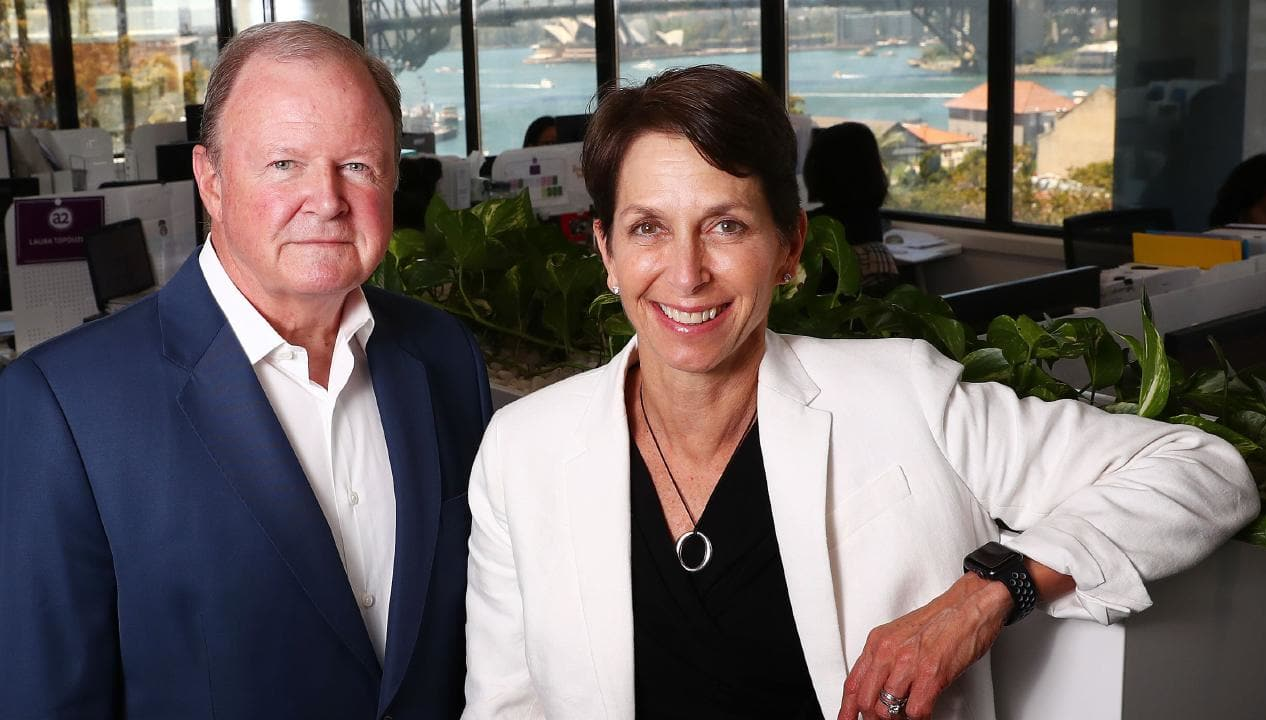
Mr Geoff Babidge (pictured below, left), a former head of Lion Dairy & Drinks’ milk business in Australia and Freedom Foods, has provided a significant contribution to the company, having joined in 2006 and secured the company’s supply and distribution channels and being one of the masterminds behind expanding its distribution base to China.
However, he has recently stepped down, handing the reins to the new CEO and Managing Director, Ms Jayne Hrdlicka (pictured below, right). Ms Hrdlicka has had a long career working at consumer oriented and international businesses, and especially had the CEO role of the Jetstar group and also served as consultant at the Bain & Co.
We believe the transition will be a relatively smooth one as Mr Babidge has agreed to remain available to the company until the end of 2018 and to serve as an advisor to Mr Hrdlicka.
Source: The Australian
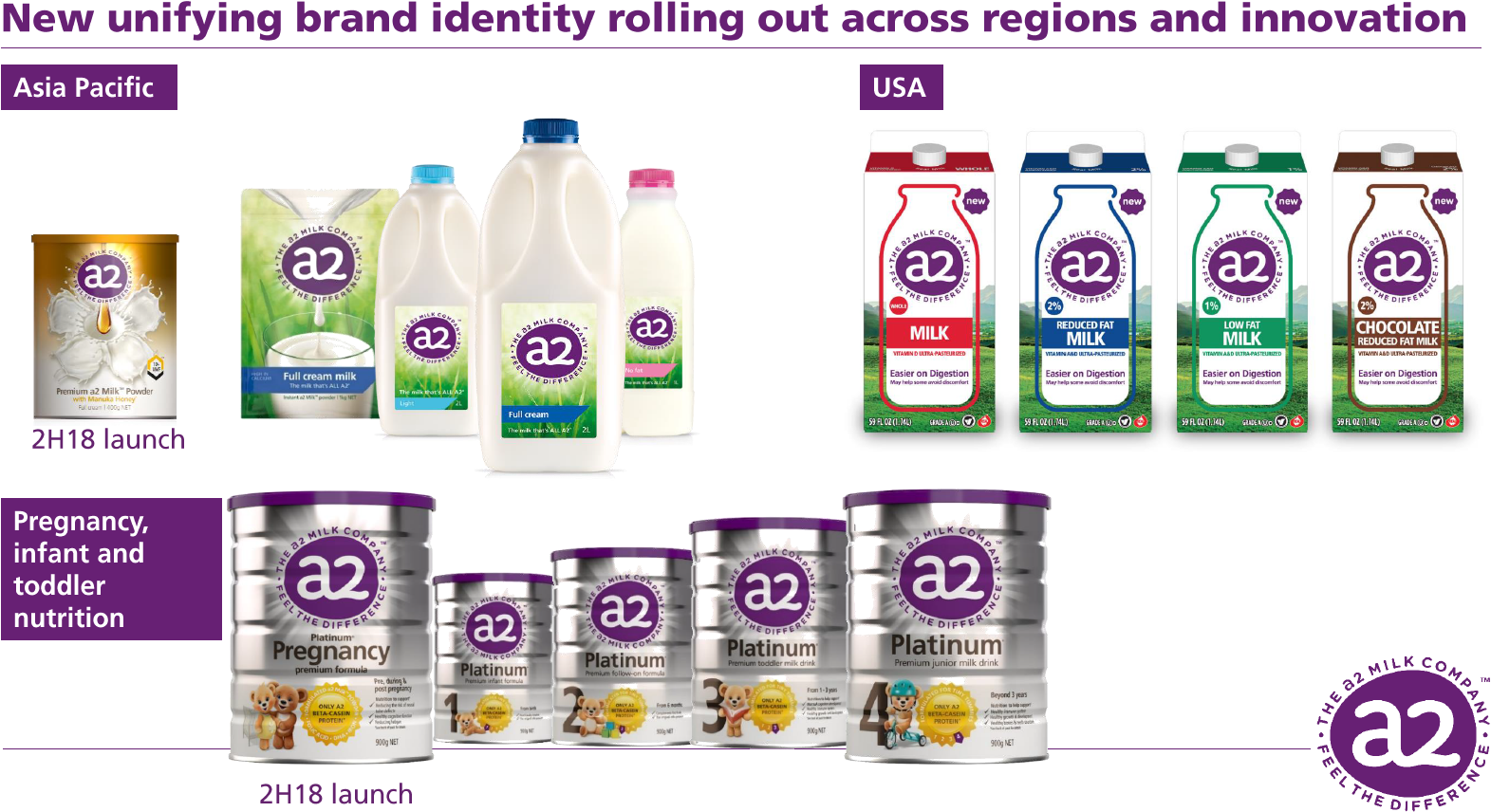
With the history out of the way, we know look at the company’s product ranges. From its name sake, the company owns “a2 branded milk” which it sells across three regional groups split between the ANZ group (Australia & New Zealand). its largest market (~80% of FY17 revenues), followed by China & other Asia (around 16% of revenues). and the remainder coming from the burgeoning US & UK region.
The picture below provides a sampling of the company’s product range across its regional segments:
Source: 16-18 May 2018 CLSA Investor Roadshow
The company has a circa 10% market share in Australia for its entire line-up in the grocery market and is the only brand to be distributed through all six key grocery retailers. The brand also has a strong share of the Infant Formula segment with more than a quarter of the market.
As at the latest trading update, the company has distribution in over 9,000 out of 60,000 Mother & Baby stores in China (~6,700 in 1H18) and has proven very popular in China due to higher levels of dairy intolerance. Aside from its physical distribution, the brand has a significant online presence with distribution in T-mall Global (Alibaba), JD.Com, Kaola.com, Mia.com and VIP.com. Note that their market share in China is at circa 5.4% and is one of the fastest growing (set to be worth over US$20 bln).
For the rest of Asia, the company has only recently launched there with distribution of over 350 stores in Hong Kong, 23 distribution points in Singapore (5 distributors) and a successful test launch in Vietnam. Management notes that they plan to fast track expansion to the rest of Southeast Asia, especially with Fonterra.
Finally, the UK and US segment. Starting with the UK, the company has a joint venture with Robert Wiseman Dairies (UK’s largest fresh milk company) and now has over 2,000 points of distribution across all major supermarkets. The company is currently repositioning itself in the UK as a premium speciality milk supplier given the dominance of private labels there.
In the US, the company has circa 6,000 points of distribution covering the North and South East regions (from New York to Florida) and in California. Though, industry trends indicate that dairy consumption in the US has been falling, the company is operating in a growing niche segment especially with more millennials opting for specialty milk categories.
Despite having a massive global distribution, the company operates a capital light business model where it contracts with carefully selected farmers who segregate A2-only herds and the company incentivises these farmers as they pay the leading farm gate prices. This is easily manageable considering the high gross profit margins it makes at circa 49-50%. The company also contracts with third party processors to avoid having to set up a milk processing facility and keep overheads much lower.
We now take a look at the company’s most recent financial performance:
Recent Financials (1H18) – Currency in NZ$ unless otherwise noted
The company’s 1H18 results, covering the half year period to 31 December 2017 have been quite strong and beat consensus estimates. Revenues were up circa 70% year-on-year to $434.6 million as led by Infant Formula which saw growth of circa 85% year-on-year and represents the lion’s share of the total at around 78%. According to management, performance in Australia and China was key having seen significant market share gains over the period.

Source: 16-18 May 2018 CLSA Investor Roadshow
Moving on down to a segment basis, ANZ revenues surged 47% year-on-year to $304.3 million with strong growth in both infant formula and fresh milk. EBITDA increased 65% year-on-year while EBITDA margins rose 420 basis points to 38.3%.
China and other Asia
revenues were the real highlight of the interim period having more than doubled (~203.4$ yoy) to $114.4 million. According to management, massive growth in distribution channels over the period (+5,250 Mother & Baby stores) were a significant factor while also gaining notable results in Kaola.com, JD.com and on Tmall. EBITDA likewise surged (+252%) to $48.3 million while EBITDA margins ballooned to 42.3% (+520 bps) despite heavy market and regulatory spend. Management noted that the company gained 180 basis points in market share to 5.4%.
Finally, the UK and USA segment reported solid revenue growth of 36% year-on-year to $16.1 million. Despite the difficult retail endowments in the UK, revenue surged ahead over 50% year-on-year having added over 400 points of distribution while US operations report significant growth in brand awareness and store distribution. However, given the lack of scale, EBITDA still came in at a loss of $8.4 million.

Source: 16-18 May 2018 CLSA Investor Roadshow
Gross Profit Margins were solid thanks to a positive product mix with higher margin infant formula sales – this led to margin expansion of 330 basis points over a year-on-year period at 49.8%. Management also noted that they implemented a price increase across all channels to reflect cost inflation and this was readily absorbed by the market.
Operating costs unsurprisingly rose year-on-year as well considering the rapid growth, up 33.6% year-on-year to $73.6 million. This was led by marketing expenses up 62% year-on-year due to supporting growth in China and in the US. This was followed by higher employee costs (+65% yoy) and in line with the company expanding operations across its main operating markets (ANZ, China). Nevertheless, expenses as a percentage of sales dropped 459 basis points to 16.9% due to the faster pace of sales growth.
All in all, the company ended the interim period with Underlying NPAT of $98.5 million, up 150% year-on-year while EPS grew at a similar pace (+147%) to NZ13.6 cents.
Outlook – currency in NZ$
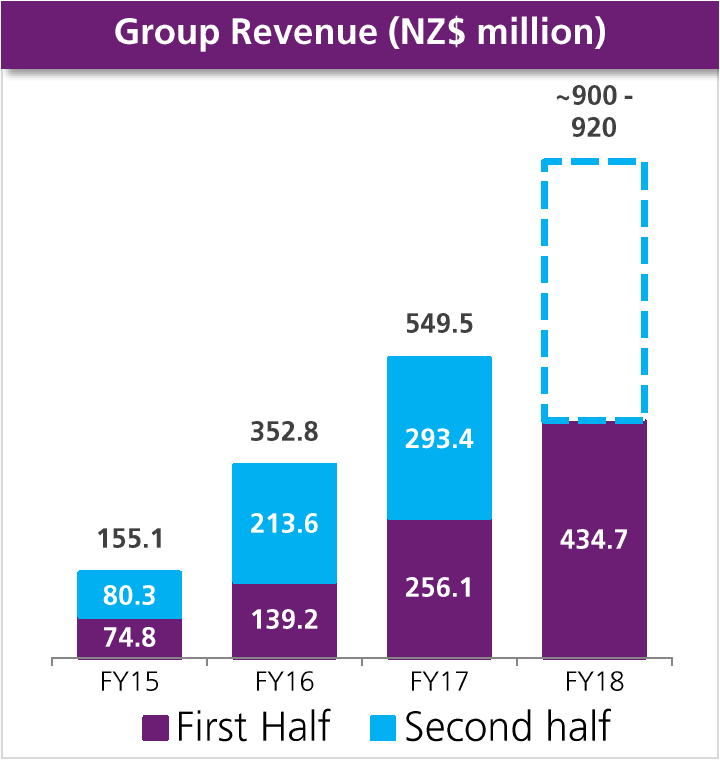
In 16 May 2018, the company provided a trading update adjusting its FY18 guidance. In it, the company noted revenue guidance between $900-920 million which represents a year-on-year growth of between 63% and 67.5%. A notable point is that this was lower than consensus expectations of 72% growth (~%947.1 million) and was adjusted to reflect the new CFDA product labelling and packaging requirements. The company has mitigated a substantial amount of the impact as they stocked a lower level of inventory to distributors to minimise discounting on old packaging products.
Source: 16-18 May 2018 CLSA Investor Roadshow
Last week the company provided a further update post the year end cut-off. Management noted that unaudited Group revenue for the financial year ended 30 June 2018 totalled around $922million (ahead of revised guidance). With costs rising, the Company also confirmed that it expected an EBITDA to Sales ratio for FY2018 to approximate 30%.
The revenue beat was sound, while margins remain strong. Investor reaction though was fairly lukewarm, given a lack of colour around what FY19 might look like. This also speak to the pitfalls of investing in stocks such as A2 which are priced for growth – if lofty expectations are disappointed or any weakness is sensed, the reaction can be harsh.
Investment Conclusion
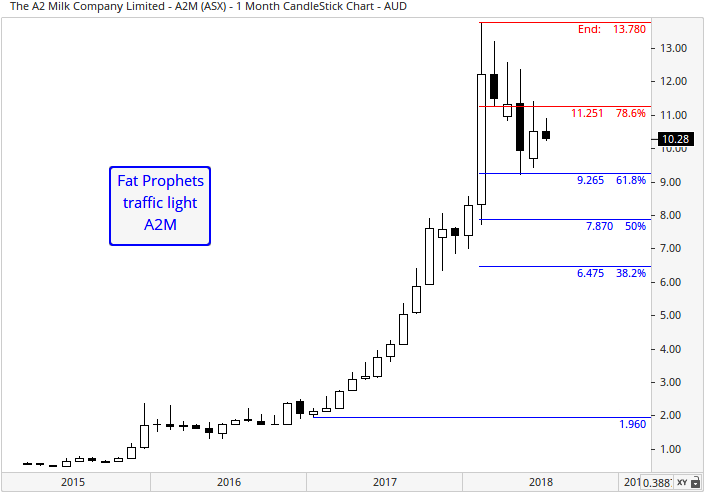
Though we ultimately are impressed by the journey of the A2 Milk Company, and its market positioning, the fact is that the stock is trading at around 44 times FY19 projected earnings. With this being double the sector median there is minimal margin for safety, with any further disappointments likely to be harshly treated. After a stellar run over the past year, the shares also appear to be probing the psychological support at $10.
Furthermore, the company is beset with numerous risks from new entrants (Nestlé), to regulatory risks in China as well as manufacturing and supply risks (they don’t own any farms). The company is also subject to substantial Forex risks given operations across four continents and numerous countries.
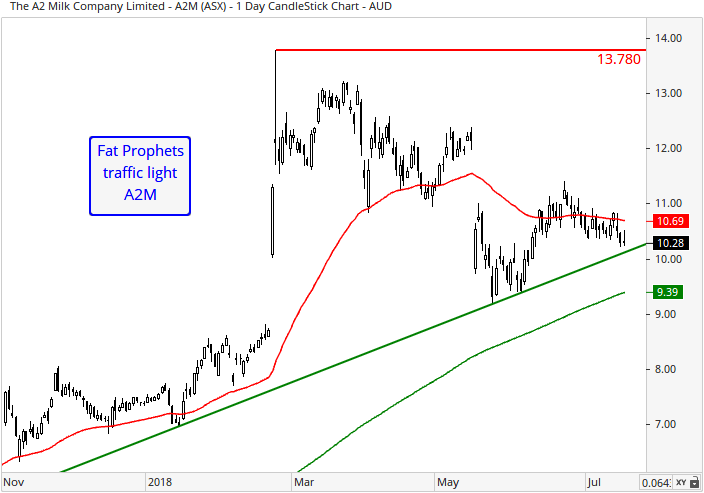
As such, we believe the prudent move is to wait for a possible rerating before issuing a buy recommendation. At this juncture we are issuing a Traffic Light alert on A2 Milk (ASX.A2M, NZE.ATM) and will wait for a better entry point.

