
Key Market Insights and Stocks Covered This Week
- Soft US inflation data usually buys lower yields. Not this week – the Treasury cleared its highest 10- and 30-year yields in decades while the S&P 500 hit a fresh record. Two markets, two different reads. We explain why.
- Three signals converged on the bond market this week, and the mechanism behind all three has a name: Kevin Warsh. What he says at Jackson Hole could be the biggest catalyst for yields into year-end.
- Gold’s correction looks over, and for once it’s not moving for the reason you’d expect. When the question shifts from the price of money to the credit of the borrower, a specific pocket of insurers starts moving with it.
- Three Australian banks delivered almost the same disclosure this week. The market handed out three different verdicts, and the reason why says more about sentiment than fundamentals.
- The RBA held on Tuesday, but Bullock’s press conference was perceived as a hawkish hold. We think the market’s pricing on the next move is wrong, and it comes down to housing.
- Report Spotlight: Suncorp’s (ASX: SUN) 44% profit fall isn’t what it looks like. What to look at instead.
The fatLITE is the weekly read. Membership is the position.
The Verdict
Excluding the continued uncertainty about the Strait, the bond market didn’t accept good news this week and needs to be watched like a hawk. Soft inflation data usually buys lower yields. Not this time at the long end. July CPI came in soft for the second consecutive month. July PPI was unchanged month-on-month and decelerated to +4.7% annually from +5.5%. Oil unwound its Monday spike on Thursday, WTI falling to $81.15 even with the Strait of Hormuz still effectively shut. The dollar failed to rally even as yields held. The short end believed it, but the long end refused.
July CPI came in soft for the second consecutive month. July PPI was unchanged month-on-month and decelerated to +4.7% annually from +5.5%. Oil unwound its Monday spike, even with the Strait of Hormuz still shut. The dollar failed to rally even as yields held. The short end believed all of it, the 2-year falling 5bps across the four sessions to 4.15%.

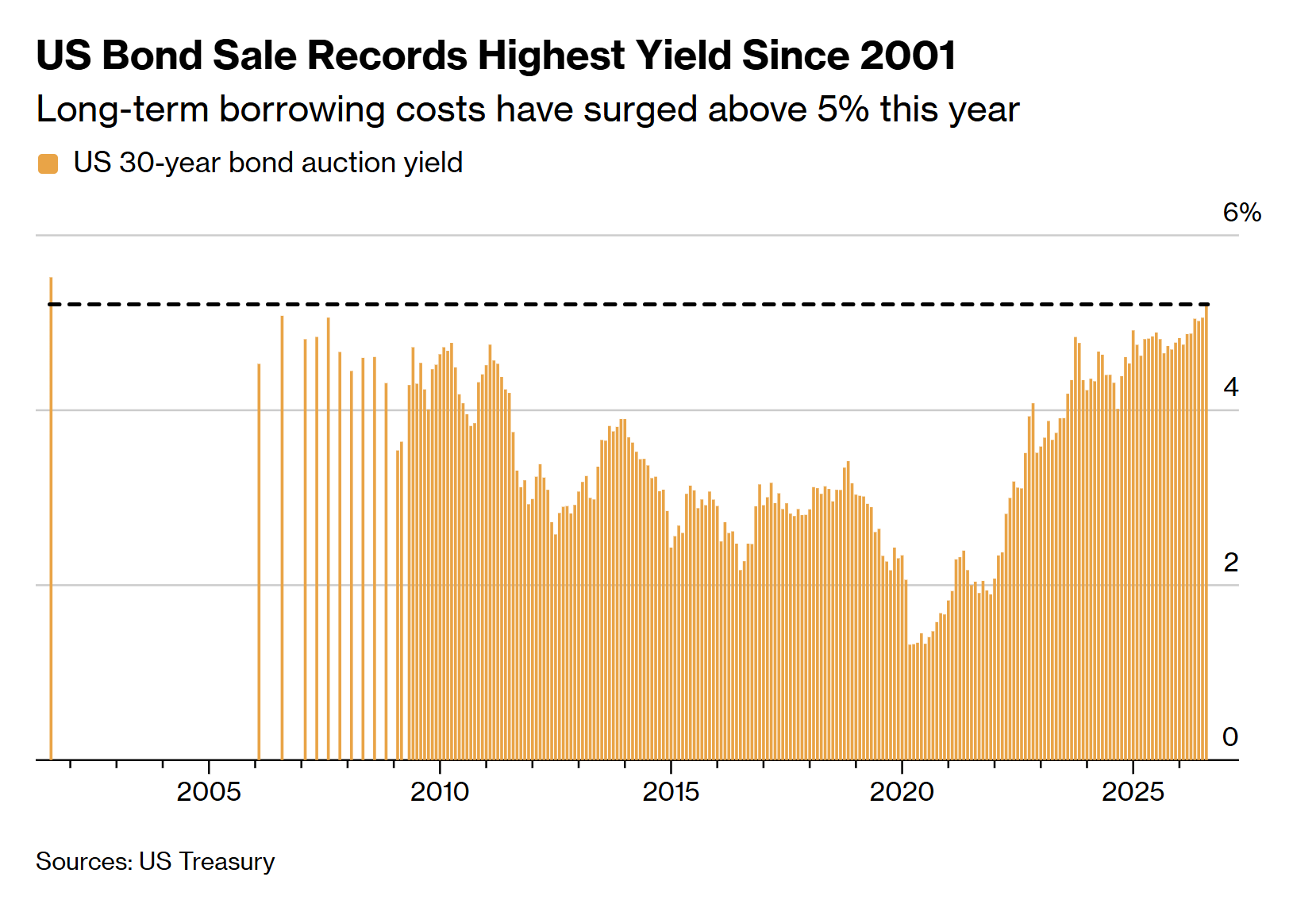
The long end did not follow. The 10-year finished the four sessions at 4.65% and the 30-year at 5.22%, both effectively where they began, so the curve steepened because of the front end’s move, the gap between the 2-year and the 10-year widening from 45bps to 50bps. The reason the long end would not come down is highlighted by auction results. The Treasury sold $42 billion of 10-year paper at 4.683%, the highest clearing yield since 2007, and $25 billion of 30-year paper at 5.216%, the highest since 2001 – a quarter-century. US national debt crossed $40 trillion for the first time. Investors were not refusing to lend to Washington. They refused to lend at the old price.
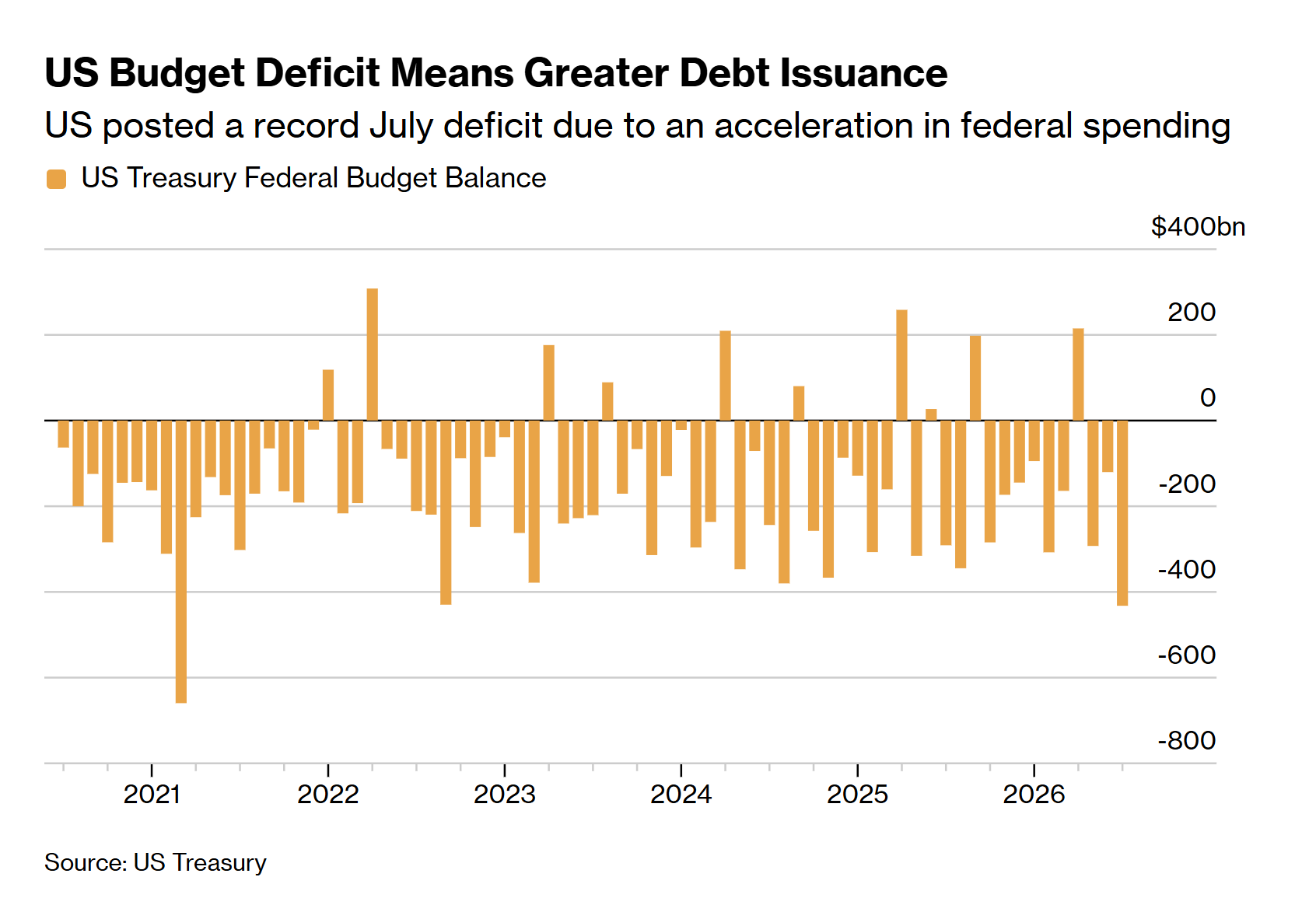
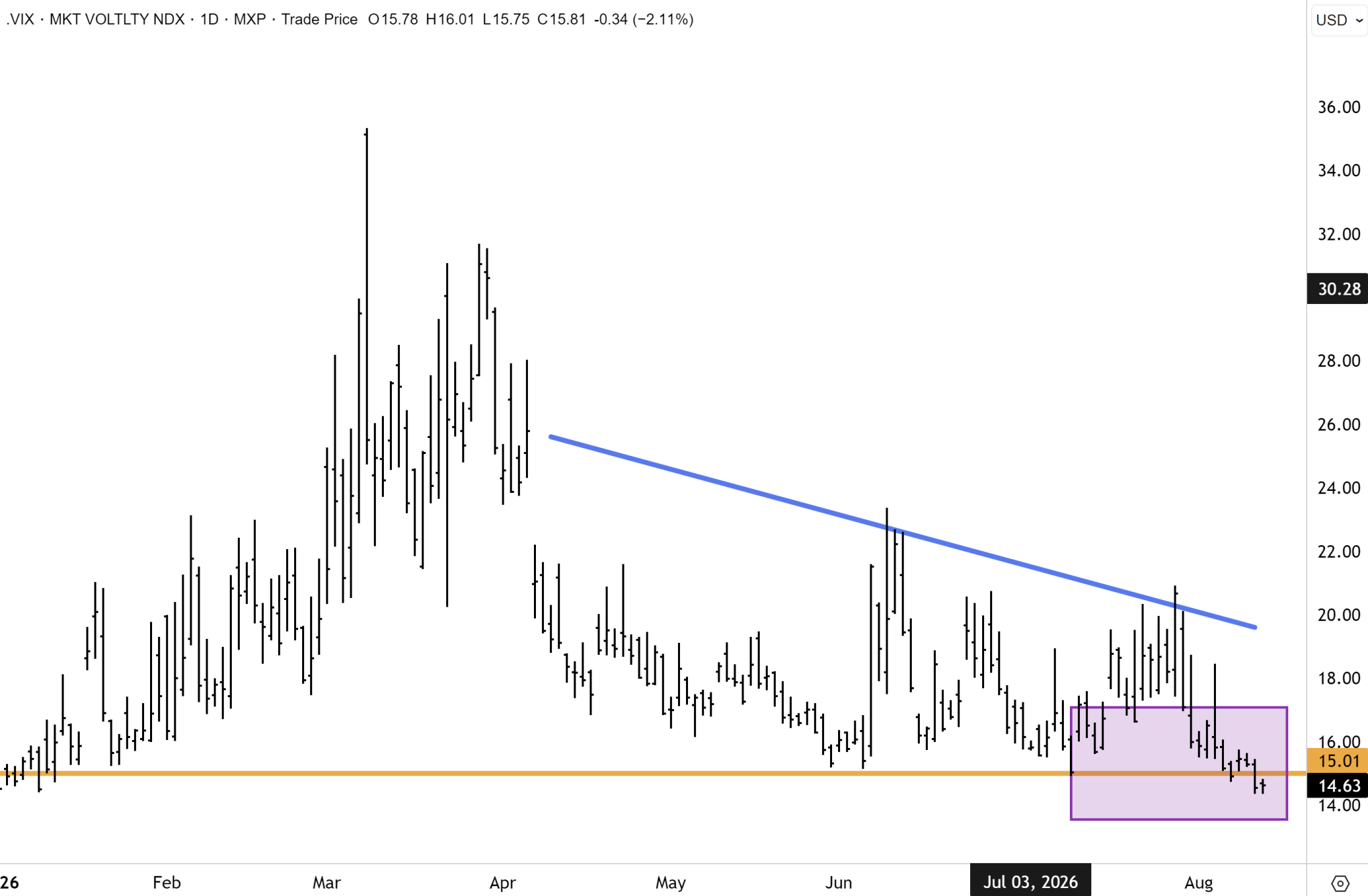
However, those who watch equities only were not asked to think about any of it, and it likely flew under the radar for many – that’s why we are here to help. The S&P 500 closed Thursday at a record 7,799, up +0.65% on the session with semiconductors leading, and volatility fell to its lowest since January as the VIX broke the 15 floor, five months on from the March spike to 36 that we called this year’s peak at the time.

In Tokyo, the Topix closed at a record 4,176 on chip demand and a bank rally. The ASX 200 went the other way, easing slightly on Thursday to 9,188 and falling in three of the four sessions as reporting season delivered unevenly and breadth thinned. Gold touched $4,467 midweek and traded around $4,400 at Thursday’s close, while copper and iron ore sat at $6.60 and $95.65.
The short end believes the inflation data, but the long end of the bond market does not, while the equity market has not yet been made to choose between them. A bumper earnings season and a return in popularity of the AI narrative are behind the latter, and we believe this supports stocks into year-end. We continue to monitor, as when those three disagree, the long end is the one that has historically been proven right, and it is eventually the one that prices everything else.
The Calls
Three signals, not one. The desk set the case out in Friday’s note, and it is worth keeping in its own voice:
“Three outcomes struck me about the 10yr and 30yr sales this week. Firstly, the actual clearing yield itself, which was surprising given the drop in oil prices this week. Secondly, both the CPI and PPI inflation prints didn’t come in hot, and in fact pointed to inflationary pressures remaining well contained in the US. Demand should have been higher in both auctions. Thirdly, the dollar has failed to rally in recent weeks as bond yields have ratcheted higher.”
Three signals converging is a different thing from one signal repeated, and the mechanism behind them is a relatively new player on the scene. Kevin Warsh has committed to shrinking a Federal Reserve balance sheet that reached nearly $8 trillion, which withdraws the residual buyer at precisely the moment the defence budget steps from $950 billion to over $1.4 trillion. The private sector has to absorb that, and the price of persuading it to is pointing to a permanently higher hurdle rate on every dollar the US government borrows.
Watch Warsh at Jackson Hole for the balance sheet language rather than the rates language. A firm runoff schedule is probably the single thing most likely to carry the 10-year through 4.80% and toward 5%.
The dollar is the sacrificial lamb, and all three US policy offices can probably live with that. The White House wants lower borrowing costs into November, the Treasury wants the 10-year suppressed below 5%, and the Fed wants inflation back under 2%. Those three objectives cannot be delivered simultaneously through rates, so something else has to absorb the adjustment, and the currency is the only variable all three offices can afford. The currency intervention this month highlights this, because it separates managing the path from defending the level. Washington executed through the euro-yen cross rather than dollar-yen specifically to avoid weakening the greenback in the act of supporting the yen. That is a Treasury refusing a disorderly dollar move while remaining entirely willing to accept a gradual one. It is the first joint operation to buy yen since 1998; the 1985 Plaza Accord is the precedent, and the dollar fell nearly 50% inside two years after that one. We expect more intervention rather than less going forward.
For an Australian investor, a falling greenback typically means a rising Australian dollar. The offset sits in the resources complex, where a weaker dollar lifts commodity prices, and BHP (ASX: BHP) and Rio Tinto (ASX: RIO) are favoured names for us, though only when the commodity move outruns the translation drag. The whole view breaks if the Fed is forced into a defensive hike, which would put a floor under the dollar and take the rest of it with them.
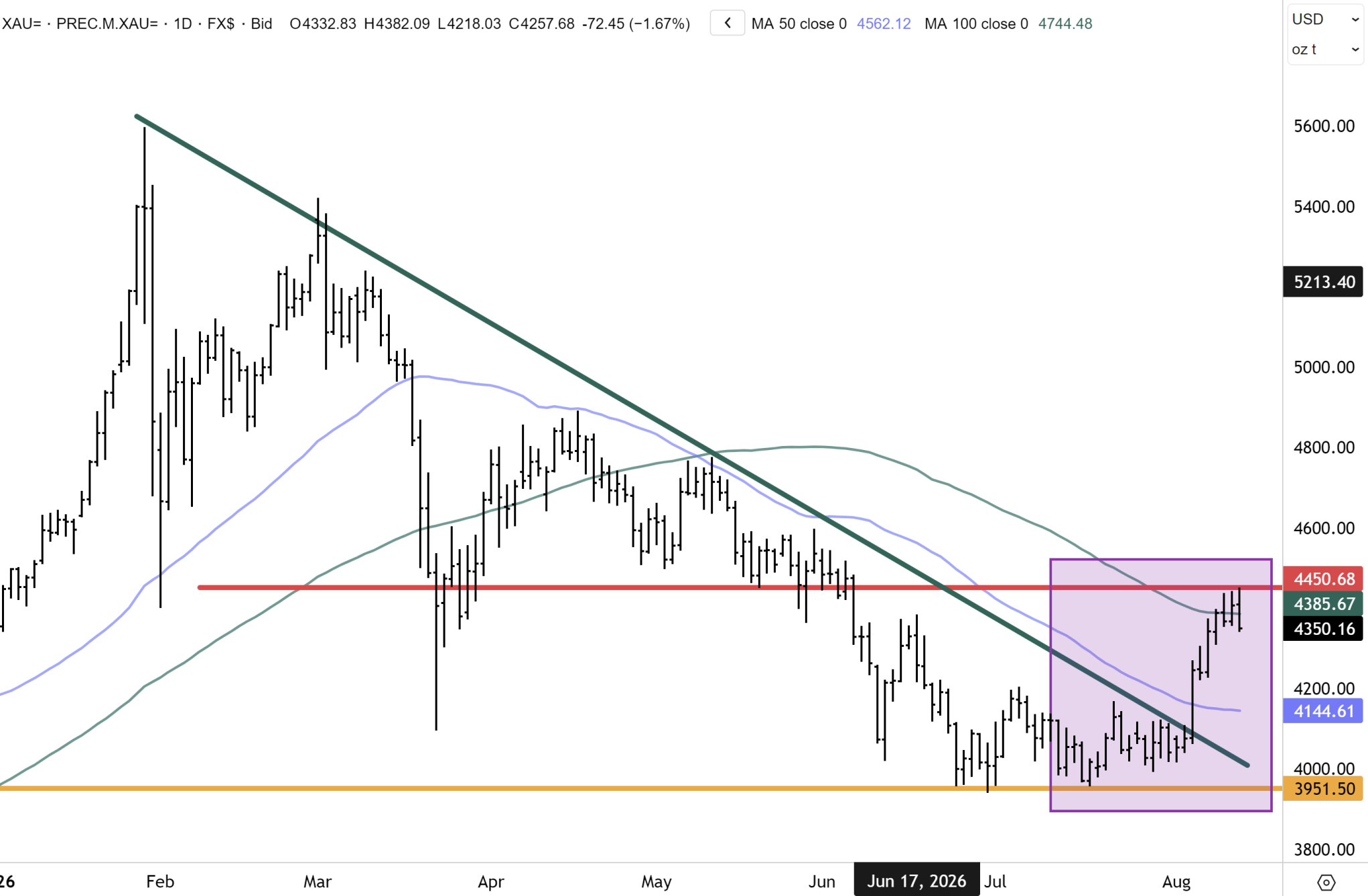
Gold has, in our view, traced out a bottom and exited a multi-month correction that commenced at the record highs. The recent breakout above this year’s downtrend and rise above the 50day moving average likely points to resuming upward momentum. Near term, resistance is likely going to be encountered at the 100-day moving average, which presently intersects between $4,450/$4,500, but our base case remains intact for the $5,000 level to be retested by December.
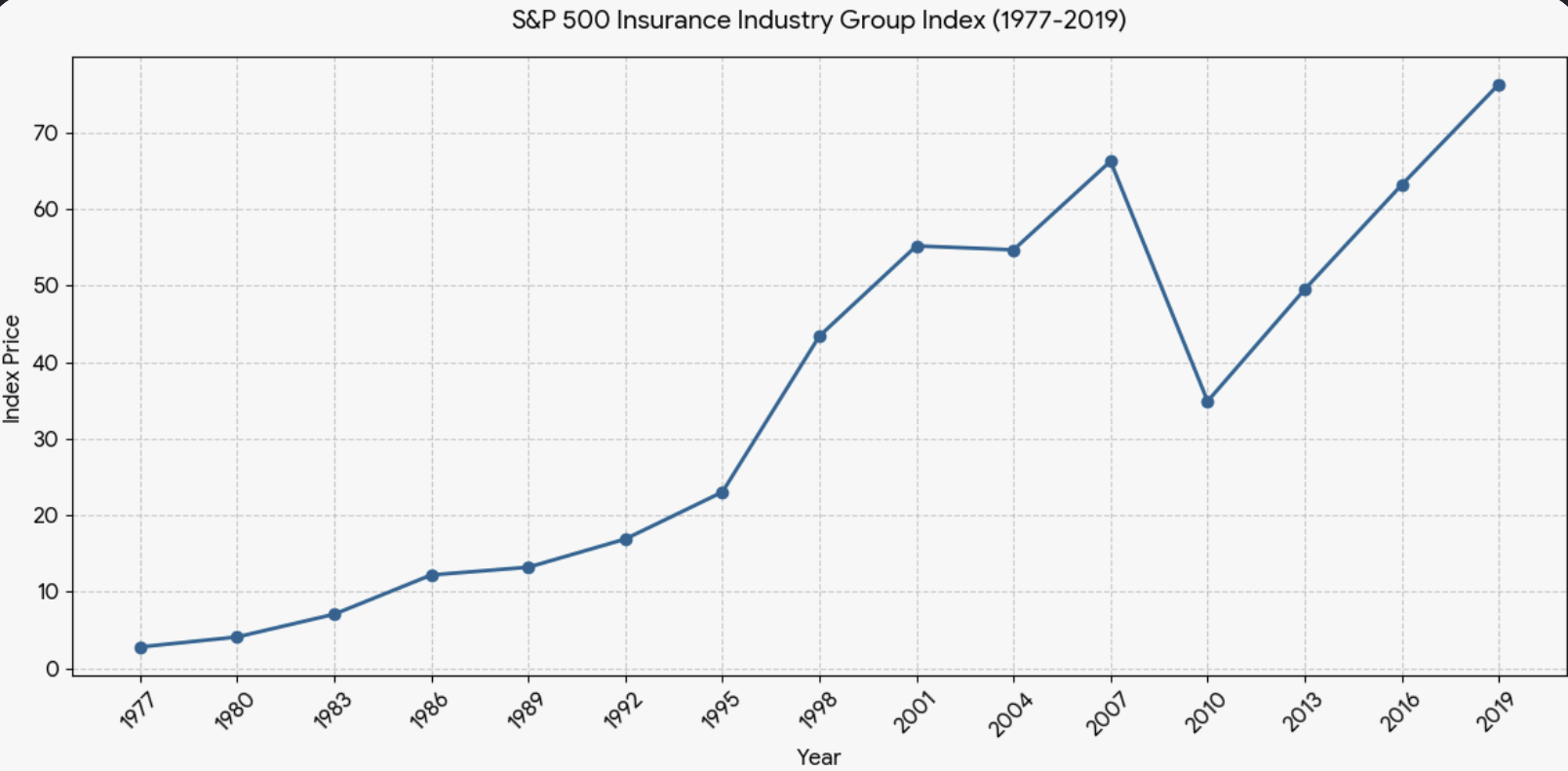
Insurers and Japanese financials are a way to own the bond thesis without owning bonds. The Fat Prophets Global Contrarian Fund confirmed a new US insurance sector position in Friday morning’s NTA update alongside fresh positions in Netflix and Meta. An insurer collects premiums today and pays claims later, so it permanently holds a large fixed income portfolio funded by someone else’s money. Between 2008 and 2022, with the US 10-year at one point near 0.5%, that portfolio earned close to nothing and the sector de-rated accordingly. At the long-end yields now on offer, every bond maturing inside that book gets reinvested at a materially higher coupon. Rising yields mark down the existing holdings, but that is a one-off capital hit against a structurally higher run-rate of investment income, which is why insurance was among the best performing US sectors through the 1970s.
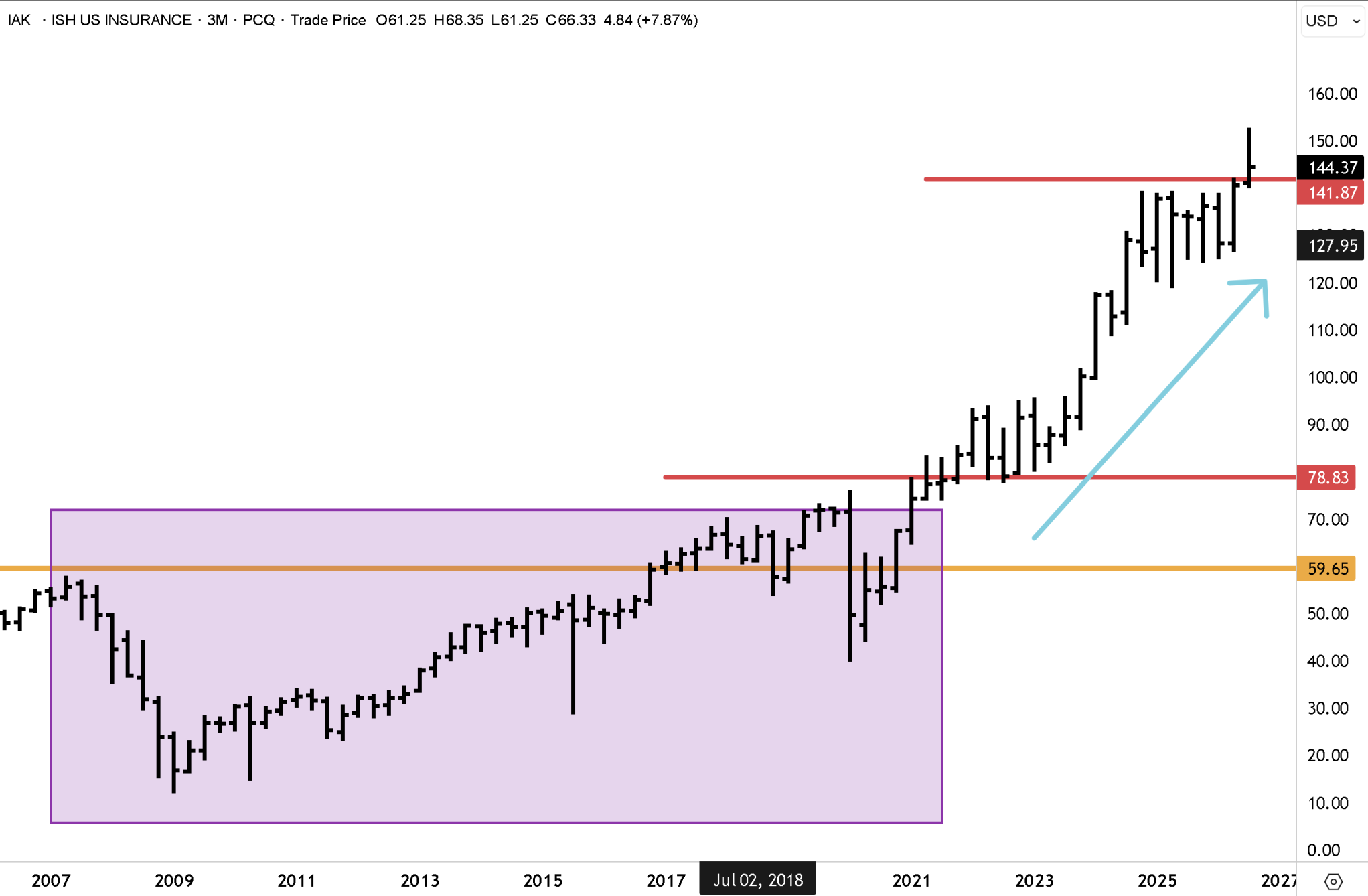
QBE Insurance (ASX: QBE) has been one of the best performing ASX 200 stocks of the past five years for precisely this reason, tracking global yields rather than the local cycle. Look for Suncorp in the Report Spotlight section. Offshore, the iShares US Insurance ETF (US: IAK) and Dai-ichi Life (JP: 8750) express the same trade.
The Local
Reporting season, not macro, did much of the work on the ASX this week. Three banks made similar disclosures and drew three different verdicts. Westpac (ASX: WBC) opened it on Monday, reporting mortgage applications falling at a 20% run-rate since the federal budget, and the market took -5.9% off the stock and -2.3% off the sector despite pre-provision profit of $2.8 billion and a net interest margin steady at 1.89%. Commonwealth Bank (ASX: CBA) confirmed it on Wednesday, cash profit up +7% to roughly $11 billion against the same application weakness, and fell on that and Thursday’s session, though CBA did flag a recent stabilisation, the one piece of evidence against reading this as a straight line down. ANZ (ASX: ANZ) disclosed a 12% fall in applications since the May budget on Thursday and rose +4.5%. ANZ delivered +5% cash profit growth to $1.98 billion excluding a NZ$125 million legal charge, on stable revenue and a 12.51% CET1 ratio, which is the structural cost story we have argued the market underrates in the Australian banks.
Meanwhile, the takeover bid returned. Cleanaway (ASX: CWY) +15.2% on an EQT proposal near $9.4 billion, Austal (ASX: ASB) initially jumped +17.5% on Hanwha’s US$1.05 to 1.2 billion approach for its US business alone, and FleetPartners (ASX: FPR) was fielding a third bidder. Cheap AUD assets and a repriced global cost of capital produce exactly this outcome.
On Tuesday, the RBA held at 4.35%, and Governor Bullock turned it into a hawkish hold at the press conference, disclosing the board discussed a hike for the first time since May, with futures closing Tuesday near a 60% chance of one more move by year-end. We think that bar sits higher than the pricing implies. Assistant Governor Kent called policy “somewhat restrictive” on Thursday and pointed to cooling housing, heavier mortgage burdens and AUD strength as evidence demand is already slowing. In our view, a central bank does not hike into a housing market its own major lenders are guiding could go down as much as 15%. That would hurt anywhere, but this is Australia we are talking about, where the home underpins massive amounts of household wealth.
Report Spotlight
Suncorp (ASX: SUN) – Buy
Suncorp reported net profit fell by 44% to $1.03 billion, driven by weather. The insurer absorbed $2.02 billion in natural-hazard costs from 32 significant weather events and over 120,000 claims, $254 million above allowance. Strip that out, and the insurance business is performing well. The insurance trading ratio held at 11.8%, the top of its target range, underlying earnings rose 4.5%, and gross written premium grew 3% as pricing discipline continued.
The real catalyst for FY27 is the new five-year aggregate reinsurance cover, providing up to $800 million of annual protection. In roughly 90% of scenarios, this caps the additional hit from future catastrophes at just $50 million, a dramatic reduction in earnings volatility from what FY26 shareholders experienced. A second, more predictable earnings engine is quietly strengthening. Higher bond yields are lifting investment income on premiums held before claims are paid, a structural tailwind expected to build over coming quarters. Capital returns remain generous despite the weather hit. A 52 cent fully franked final dividend, a 10 cent special dividend, and a $250 million buyback.
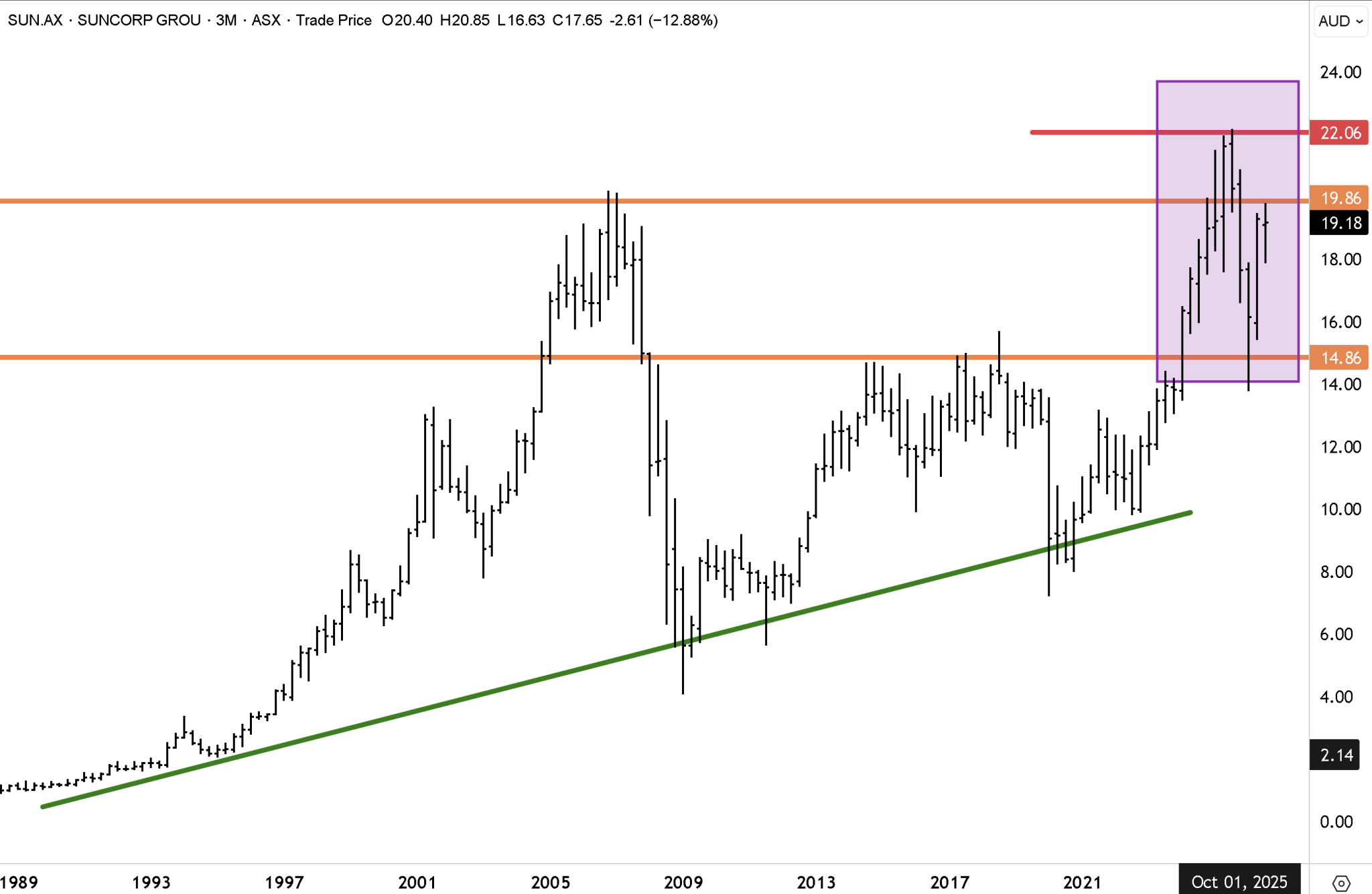
Suncorp has forged higher to retest the old resistance level at $20, which defined the cycle highs established back in 2007. We anticipate a retest of the key overhead resistance level at $20 to arrive soon and result in a topside breakout. Suncorp pertinently has held up above the primary uptrend and completed a successful retest of the low 2021 lows.
We maintain our bullish technical outlook on Suncorp and believe a buying/accumulation window has opened. Our base case technical view is that Suncorp will retest the record highs either this year or early in 2027 when bond yields reassert on the topside. We have conviction in our bullish technical outlook for the stock over the medium to longer term.
Everything in this fatLITE is the surface. The full reports, macro commentary, model portfolio, and buy recommendations are members-only. Try it with our 30-day money-back guarantee.
The full, more detailed versions of all these reports and many others spanning Australasia, Mining and Global Equities are available online for your reading pleasure. Links to the different landing areas for Members are at the bottom of the FatWrap.
Have a great weekend.
Carpe Diem
Angus

