
Momentum Despite Threats
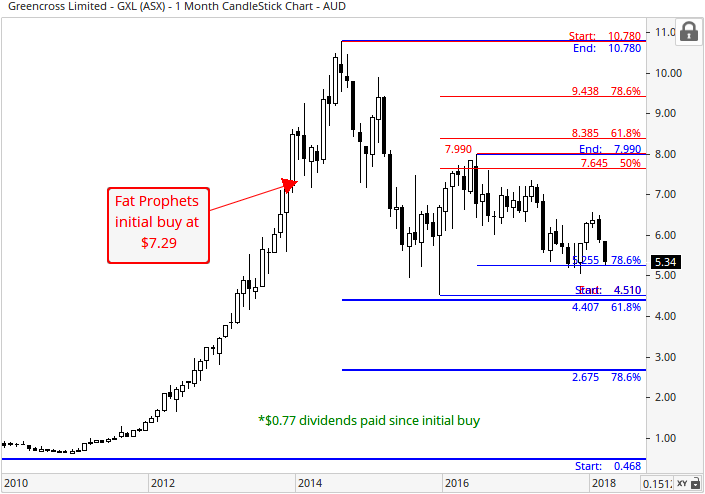
Shares in integrated petcare player, Greencross (ASX:GXL) have remained under pressure since the arrival of Amazon to Australia in December. Despite that threat, the company has performed quite well operationally with the roll-out of its co-location stores, combining both veterinary clinics with retail locations. We see evidence of that in the company’s most recent interim results which is the focus of today’s report. That aside, the company also transitioned Mr Simon Hickey as the new CEO.
What’s New
As we’ve noted above, Mr Simon Hickey is the company’s new CEO (with his tenure starting 05 March 2018) as the previous incumbent, Martin Nicholas, stepped down after serving nearly 4 years at the group. Mr Hickey has previously served with Qantas Airways (another company we cover in the Australian Equities portfolio) in Chief Executive roles with Campus Living Villages, Qantas International & Freight, and Qantas Loyalty.
We believe that part of his recruitment involves building up the company’s Loyalty Card business along with the Omnichannel (Online), given that Mr Hickey’s experience in Qantas involved growing the customer loyalty business from the older traditional airline model. His time at Qantas coincided with a tripling in Qantas Loyalty memberships, and saw the Qantas International and Freight business turn back into profitability. Overall, we are optimistic about his appointment.
That aside, we now move on to interim results:
1H18 Results Review – Currency in A$ unless noted otherwise.
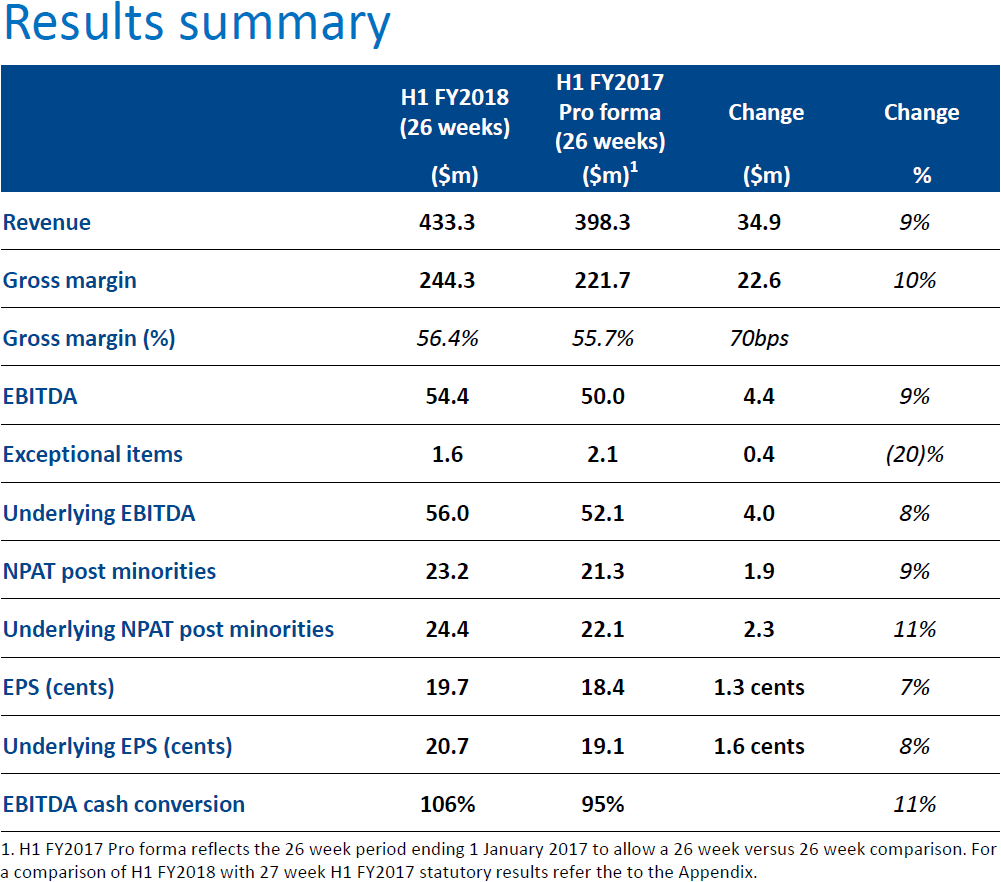
Moving on to the results, Greencross (ASX:GXL) reported a solid start for the year having achieved an 8.8% year-on-year growth in revenues to $433.28 million. A closer look at the performance and we see that the key driver of growth was the roll out of in-store veterinary clinics to existing stores.
As we’ve noted previously, we like the fact that the group is making steady progress in turning its stores into a one-stop shop model where veterinary clinics will operate side-by-side with retail stores (i.e. the “co-location strategy”). In fact, it has been quite a successful initiative since its initial roll-out in 2014, with the company consistently delivering like-for-like (LFL) sales growth. This time around, 1H18 LFL sales grew 7.5% year-on-year in retail stores that already host the in-store clinics.
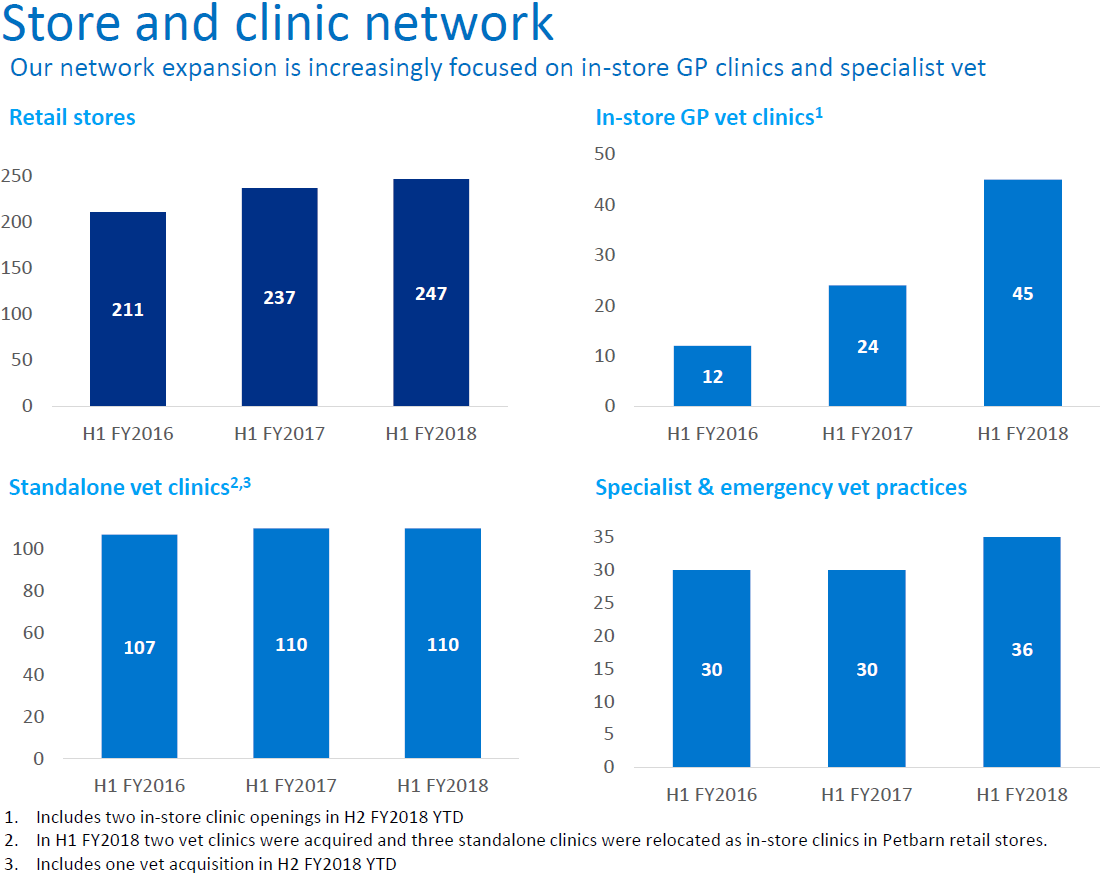
Going forward, we expect this momentum to continue as the rollout accelerates. So far, the stores that have a clinic amount to circa 18.2% of the total at 45 out of 247 stores. Again, we note that this co-location strategy is a prudent move given that having both vet and retail in one location would allow both businesses to cross-sell to each other’s customers while saving on costs. Management is also targeting a 60% conversion to co-location stores in the long-term, though they did not explicitly specify targets for this year.
Source: Greencross (ASX:GXL) 20 February 2018 Company Presentation
Looking at the other segments, the company’s Australian Retail segment delivered LFL sales growth of 4.0% mainly due to strong Christmas holidays trading with a substantial (~87%) portion of sales from repeat business as evidenced by Greencross loyalty card users. We also note that the sales mix has been moving in favour of higher value products (and subsequently margins) with the average transaction value (ATV) inching up 2% year-on-year to $53.96 and more private label sales.
The Australian Vet segment reported stronger revenue growth (+14% yoy) to $119 million while LFL sales expanded at the fastest pace amongst other segments up 5.9% year-on-year. The co-location stores saw the benefits of cross-selling and convenience while the increased visits in retail stores (+2% LFL yoy) led to more referrals to the specialist and emergency hospitals.
On that note, the specialist and emergency centres reported 31% year-on-year growth from the increased visits and now accounts for a sizable 36% of total revenues (1H17: 30.6%) at $43 million.
The New Zealand segment also reported double-digit growth in revenues, up 11% year-on-year to $51 million with LFL growth at 4.5% year-on-year. According to management, this was caused by the combination of the maturing store network and strong Christmas holidays trading.
Finally, Online retail (though not entirely a separate segment yet) remains a high-growth business segment for Greencross with revenue increasing 92% year-on-year (1H17: +45% yoy) to $9.0 million, as more customers become increasingly aware of the service. In fact, the ATV from online is almost 50% higher than the group level at $80.
As of now, online sales contribute 3.4% of Australian retail sales though we expect this to increase over time while we also like the passive cross-selling effect of the online store as it has led to 80% of online customers visiting the brick-and-mortar locations. This indicates the online channel’s effect may be greater despite being very small in comparison to retail and veterinary services.
Ultimately, we believe that Greencross (ASX:GXL) is on the right track in looking to fight off online competitors with the co-location strategy as it gives customers more reasons to go to the stores, plus Greencross’ online sales are also gaining significant momentum as well.
Source: Greencross (ASX:GXL) 20 February 2018 Company Presentation
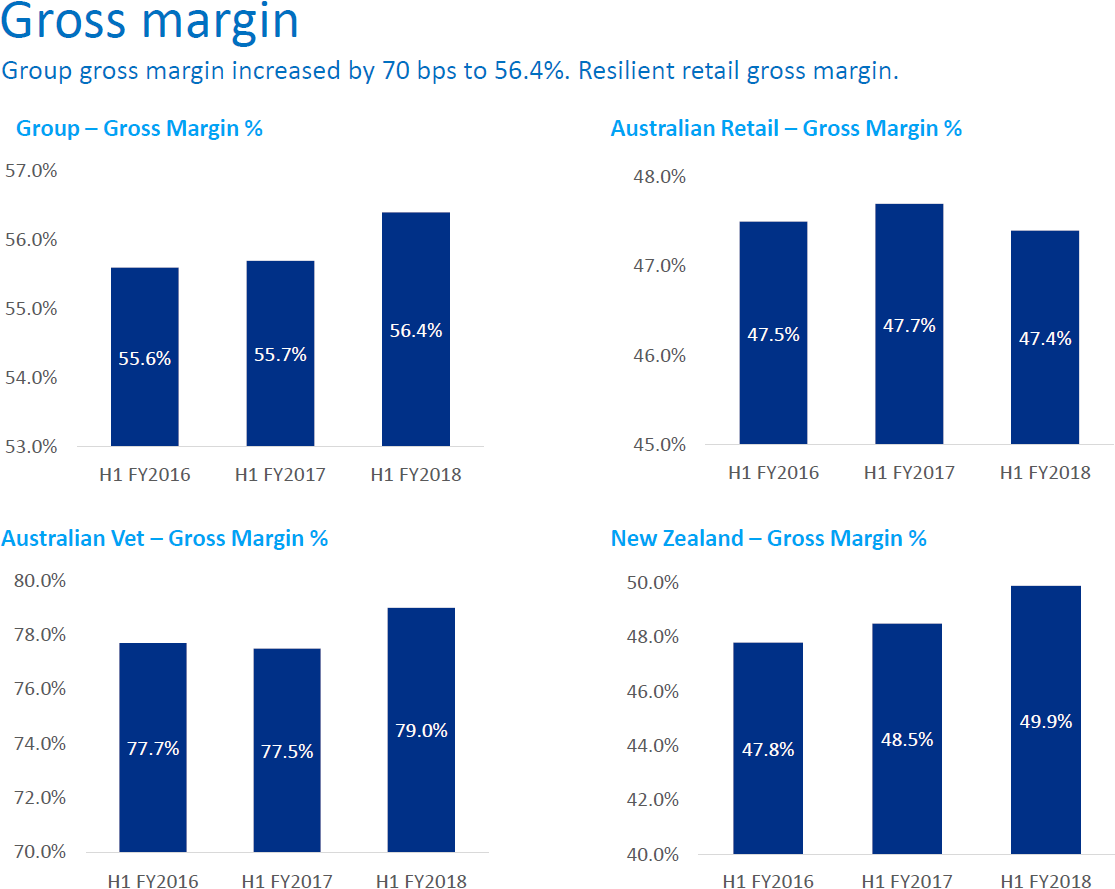
Moving on down the profit statement, with growth in sales, gross profits have also climbed though at a faster pace up 10.2% year-on-year to $244.31 million. As noted above, the incremental increase in ATV is indicative of the improving sales mix (more private label sales) while co-location and referrals to specialist and emergency centres have pushed Australian Vet margins up. Overall, Gross margins have improved 70 basis points to 56.4%.
Going forward, we expect margins to steadily expand given the increasing volumes in Private Label sales which are higher margin products. In fact, the Private Label category has now hit $50 million in sales in total with the Leaps and Bounds pet food category reporting the most rapid growth, up 37.9% year-on-year to $4 million, despite being a fairly new product (<2 years).
Another factor to increase margins would be to increase the number of co-location stores and referrals to specialist and emergency centres.
On operational costs, the increases in the company’s operating expenses were largely due to ‘expansionary’ activities with the addition of new sites and conversion to co-location stores. As such, operating costs rose 11% year-on-year to $188.27 million.
Management has kept up the pace of network expansion and viewing this in combination with the company’s store co-location programme, looks to be a solid setup going forward. Below, in the following graphic, we see the growth in store numbers and co-located stores. Notably 21 in-store vet clinics have been added in the year to cover 45 stores.
Source: Greencross (ASX:GXL) 20 February 2018 Company Presentation
Another notable development is customers who cross-shop (customers who shop across retail, vet and grooming) have surged 34% over the past 12 months to over 212,000 customers and now represents 13% of the active customer base (1H17: 10%). These customers also visit 25 times per year and spend circa $1,874 (+30.1% yoy) and account for a sizable 28% of revenues and 32% of gross profits.
Overall, net profits attributable to owners came in 10.7% higher at $26.53 million while EPS rose 8.4% to A20.7cents. Going forward, we believe that Greencross can sustain their margins given its integrated offering (co-location strategy) where they act as a “one-stop-shop” platform which combines retail with veterinary and other services like pet grooming.
Outlook
Management has also provided a trading update covering 32 weeks of FY18. Operations so far are in line with expectations with group level LFL growth at 4.2% while total sales growth is up 9% year-on-year.
Network expansion is also on track, with the company having opened 2 more in-store clinics and acquired 1 veterinary clinic.
Summary
Despite the ongoing soft retailing environment in Australia, Greencross (ASX:GXL) has been able to maintain its momentum, growing its market footprint and increasing like-for-like sales and especially margins. We like the cross-selling benefits from the success of the co-location strategy.
Over the medium-term, we believe Greencross has strong prospects for reasonable earnings growth, underpinned by the continued expansion of store and vet clinic networks, the success of the co-location strategy and increased penetration of both its private label and online strategy.
Greencross (ASX:GXL) is trading at 14.1 times FY18 earnings and offers a 3.7% dividend yield. Overall, we continue to favour the sales growth and profit margin profile of the business as a result of a fully integrated pet care business model.
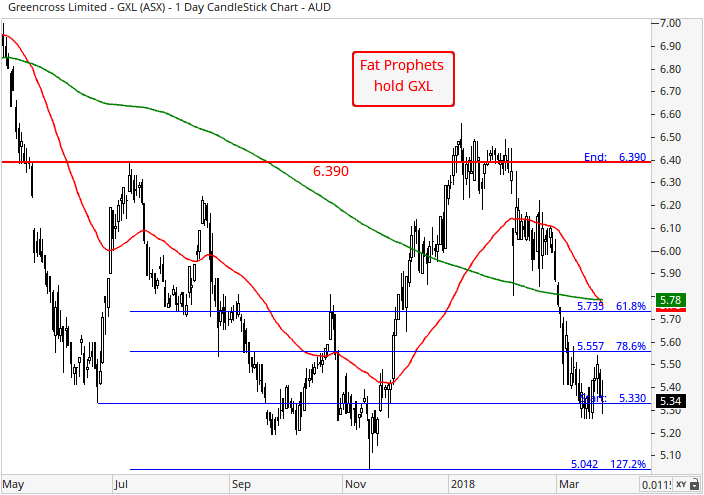
Based on FY18 guidance, we believe that there is still substantial value on offer considering the company’s market-leading position in the petcare industry and a significantly lower valuation compared to the broader sector’s 27 times P/E multiple. However, we believe it ultimately prudent to consider the disruption that Amazon could cause in the shorter term. A defensive characteristic is that veterinary and other services cannot be purchased on-line and sent in the post.
Accordingly, Greencross (ASX:GXL) will remain firmly held in the Fat Prophets Portfolio.

