

- Brent hit $100 for the first time since May, and the US 10-year touched its highest since early 2025. The two aren’t separate events. Here’s the pipeline nobody can defend, and why the bond market is pricing it before the drones do.
- 76.3k jobs against a forecast near 15k, and the Australian 10-year touched 5%. The headline says tight labour market. The composition says something else, and it’s part of what decides what happens next.
- Here’s why bonds stopped being the hedge, and where the money goes instead.
- The US Strategic Petroleum Reserve sits at its lowest since 1983. We explain why redundancy running out matters, and the level that tells you if we’re wrong.
- Local hedge funds are short the Australian banks near record levels. We agree with their arithmetic and won’t share the trade. Here’s why, and where we sit.
- In the Spotlight section this week: Generation Development Group breaks its primary downtrend – is this a buying opportunity in the beaten-up financial?
The fatLITE is the weekly read. Membership is the position.
The Verdict
Brent hit $100 on Thursday for the first time since May, and the US 10-year reached 4.7%, the highest since early 2025. Those are not two separate events. Energy was setting the rate path, and towards the end of the week the repricing had landed in Australia. The Strait of Hormuz normally carries around 20 million barrels a day, roughly 25% of seaborne oil trade and close to a fifth of global petroleum liquids consumption. The overland pipelines built to bypass it, Saudi Arabia’s ‘Petroline’ and the UAE’s Abu Dhabi line, move millions of barrels per day between them.
The second phase of this conflict asks a harder question of the pipelines. The risk now on the table is that escalation stops being bilateral and widens into a regional war drawing in other Middle Eastern states. Under that scenario, the bypass ceases to be the solution and becomes the target. The Petroline is 1,200 kilometres of pipe running from the Gulf coast to the Red Sea, built in 1981 to route crude away from exactly this problem. It cannot be defended along its length. Markets shrugged off escalation on Monday and shrugged again on Tuesday, correctly judging that the supply warnings of the first phase had been overplayed. By Thursday they stopped shrugging. Brent added +6.5% to $100.16, WTI +5.9% to $91.90, and the Nasdaq fell -2.15%.
Meanwhile, in Australia, Thursday’s June labour force report delivered 76.3k jobs against a forecast near 15k, the Australian 10-year touched 5%, and the market was pricing roughly a one-in-three chance of an August hike, with 25bps almost fully priced before year-end. The Fed moved the same way on the same days. September hike odds now sit above 80%, up from 52% a week ago. The VIX gained +12% to 18.4, a one-month high and nowhere near March. This is repricing rather than panic, which is slower and can be more durable.
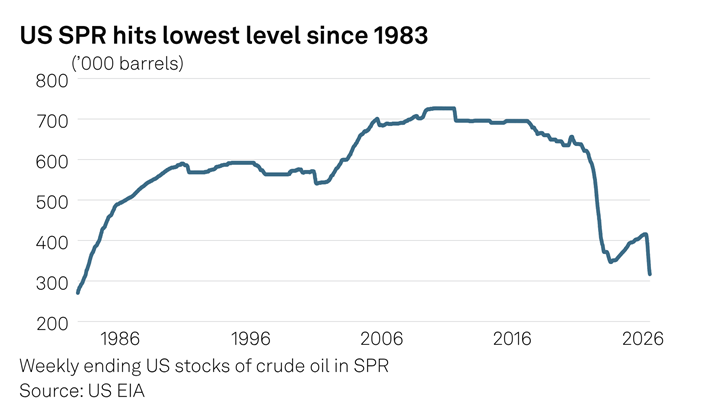
This is a war both sides lose, and de-escalation remains the rational outcome and our base case. Still, this phase carries more risk. When the war began in late February, strategic stockpiles across the major consuming nations, China and the United States among them, were deep enough to keep refineries running at capacity through the initial disruption, and that cushioning is one of the reasons the first phase was eventually priced as an unwelcome event, but not the same as a major shock. Those stockpiles have been drawn down. The US Strategic Petroleum Reserve (SPR) now sits at its lowest level since April 1983, roughly 56% empty, after around 98.9 million barrels were released. The second phase is arriving into an energy market with little redundancy left.
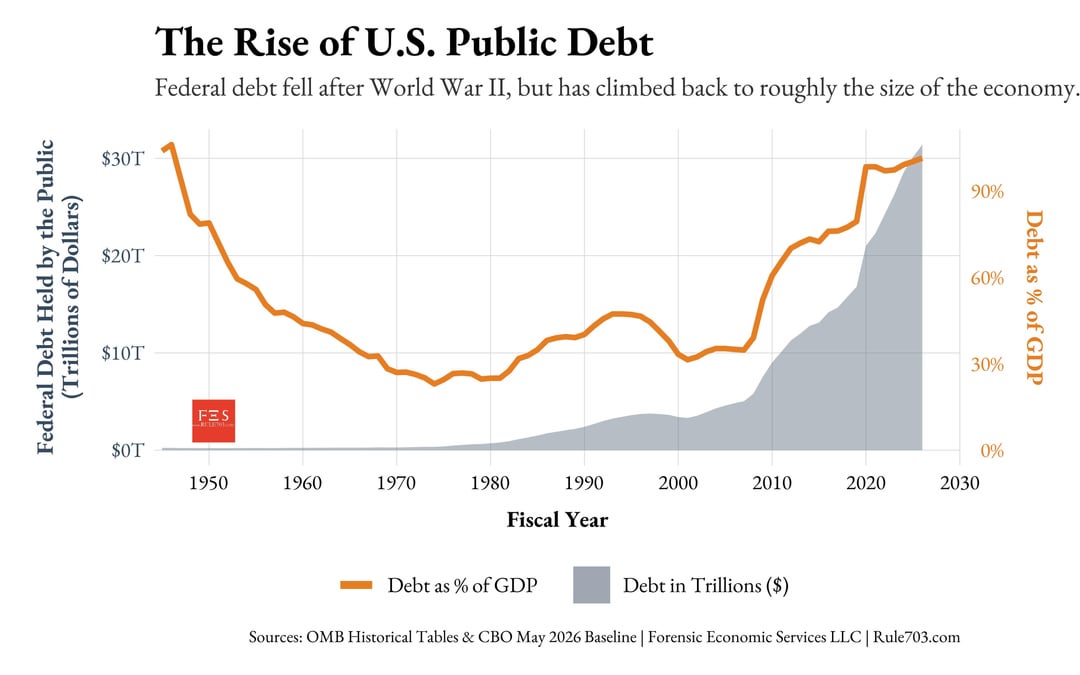
America has a lot more to lose than meets the eye. Should the 10yr bond yield rise above 5%, the US and global bond markets could become highly volatile. A rise in oil prices beyond the March highs of $120 would be enough to induce this, in my view. The US would then be faced with rising interest costs on its $40 trillion debt that dwarfs the actual cost to date of the ME war. The US government needs to refinance $6 trillion of debt over the coming year.
The Local
The June labour force report added 76.3k jobs against a consensus near 15k. The market’s response was rapid. The Australian 10-year touched 5% during the session and traded above it overnight; the ASX 200 surrendered an intraday gain of as much as +1.1% to close +0.18% at 8,839, and was heading lower again on Friday at the time of writing. The probability of an August RBA hike lifted to around the mid-30% range. A 25bps increase before year-end is now almost fully priced.
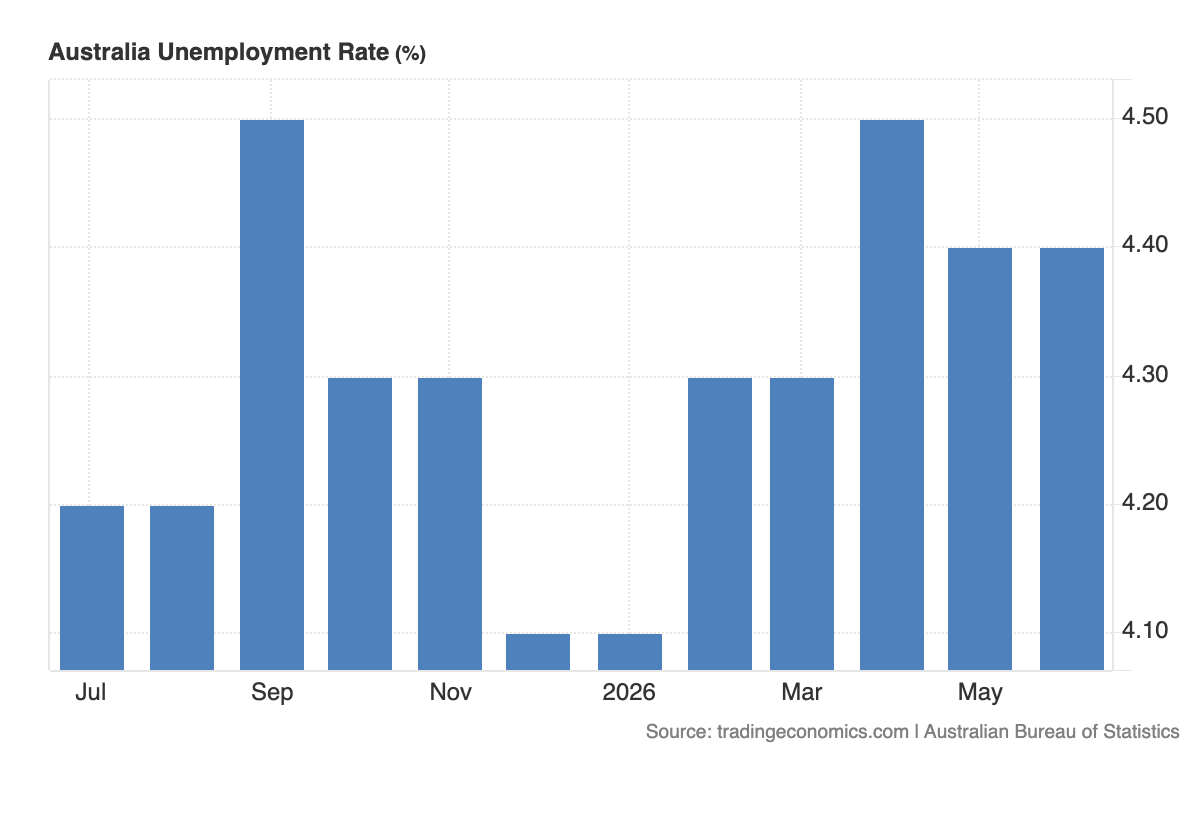
The composition deserves more attention than the headline received. Of the 76.3k, only 29.3k were full-time against 47k part-time. Participation rose to 67%, the highest since July 2025, and unemployment held at 4.4%. But underemployment rose to 6.5%, which tells us a meaningful share of those new part-time workers want hours they cannot get. This is a strong print with a soft centre, and it is not the unambiguous evidence of a tight labour market that the rate reaction implies.
The distinction matters because of what comes next. June-quarter CPI lands next week, and the trimmed mean figure will decide whether the August probability firms or fades.
Our base case remains that central banks will dial back from their present hawkishness, with the Fed on hold this year and an easing bias to follow elsewhere. However, energy costs must remain contained for this to hold.
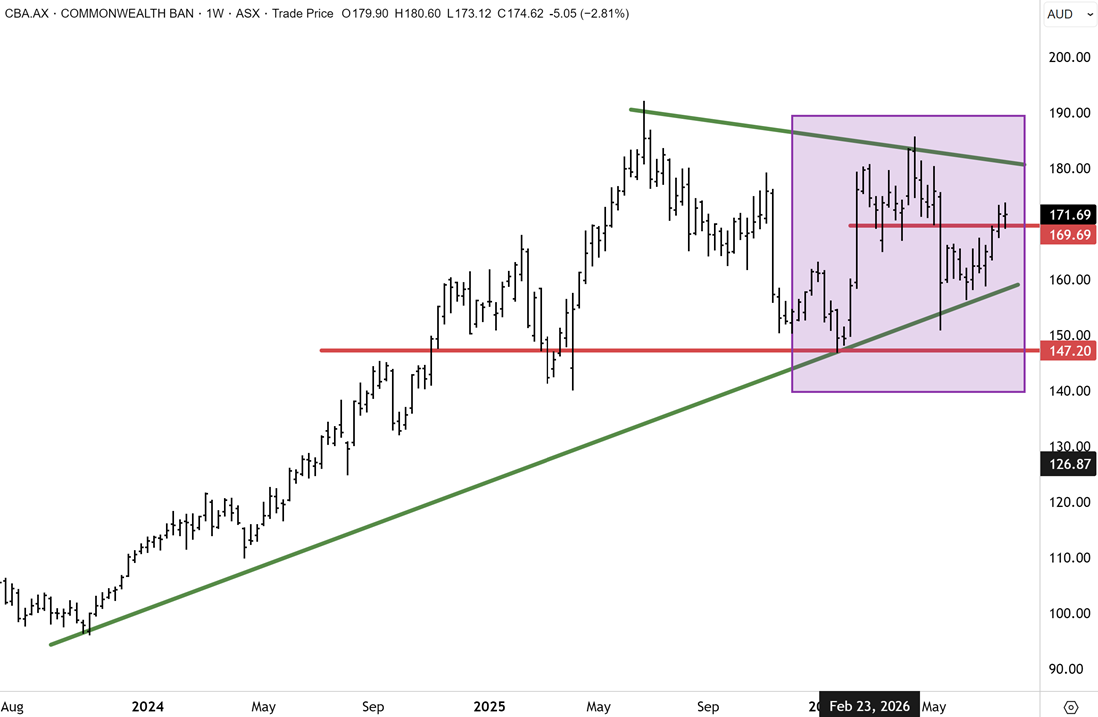
The banks are the other side of the rate repricing. Local hedge funds are short the majors at around 16%, an elevated level by any historical measure, on a thesis combining property weakness, mortgage demand and valuation against global peers. We don’t dispute the basic arithmetic, but we aren’t on the same trade. Over a long horizon, shorting the Australian banks is shorting Australia, and that is not a position we want. Commonwealth Bank (ASX: CBA), the bellwether, continues to coil within a contracting range, respecting a three-year primary uptrend. The break above $169 points to $180 in coming months. Below, a loss of $160 opens $147. We hold CBA in the Australian dividend income portfolio.

The Calls
The first phase of this conflict was contained, and the market read it correctly. It was fought around the Strait, the US struck military and non-essential targets, and the supply warnings issued by analysts and the media proved overplayed. That judgment held into the early stages of the week, as equities shrugged off escalation and rising crude on Monday and again on Tuesday.
The second phase is less contained, and the specific danger I see is that it stops being bilateral. Escalation now carries a real prospect of drawing in other Middle Eastern states. While the US-Iran exchange is, in large part, a shipping problem for energy, a regional war has an infrastructure problem. US strikes on Iran drew retaliation against neighbouring Arab states hosting American bases. The Houthis, who had already threatened a second transit artery in the Red Sea by Tuesday, hit two Saudi tankers there by Thursday. The President committed to destroying Iranian infrastructure in response to every attack on shipping. Oil surged, and equities stopped shrugging.
If the US strikes core Iranian infrastructure, the available retaliation is regional energy infrastructure, and perhaps the most valuable target on that list is Saudi Arabia’s East-West Crude Oil Pipeline. The Petroline runs 1,200 kilometres from Abqaiq on the Gulf coast to Yanbu on the Red Sea, built in 1981 for the express purpose of routing crude away from Hormuz, and can carry millions of barrels per day.
But how would Saudi Arabia or the US, for that matter, protect a pipeline that long? Iran could target this pipeline easily with drone technology and cause further disruption to global energy markets. This is what the bond market is likely sensing and pricing in. The financial markets correctly figured out during the first phase that initial energy supply concerns were overplayed by analysts and the media. But this 2nd phase is more worrying if there is no de-escalation and a return to the negotiating table, in my opinion.
The redundancy that carried the first phase has dissipated. When the war began, strategic stockpiles across the major consuming nations, China and the United States among them, were deep enough to keep refineries running at capacity through the initial disruption. That cushioning is the main reason phase one resolved as an inconvenience rather than a shock, and it is the reason the analysts warning of catastrophe in March were wrong. However, the US Strategic Petroleum Reserve now sits at its lowest level since April 1983, roughly 56% empty, after around 98.9 million barrels were drawn following the February closure as part of a 172 million barrel release inside a wider IEA action. The same escalation arriving today meets a materially tighter supply picture than it would have met four months ago.
Both governments have strong reasons to reopen negotiations. We hold de-escalation as the base case and treat the pipeline scenario as the tail that markets are now paying to insure against. Should there be a ceasefire, the move down would be fast. Local exposure runs through Woodside (ASX: WDS) and Santos (ASX: STO), both of which tracked the moves in oil this week.
The bond market is the transmission mechanism. The US 10-year closed Thursday around 4.7%, the highest since early 2025, having traded below 4% before the war began in late February. The 2-year rose to 4.35% and the 30-year to 5.16%. My argument is the US bond market represents the Achilles heel for the US, given rising bond yields will push up debt servicing costs, accelerate the national debt higher, and blow out the deficit with larger interest costs.
Out with the new, and in with the old.
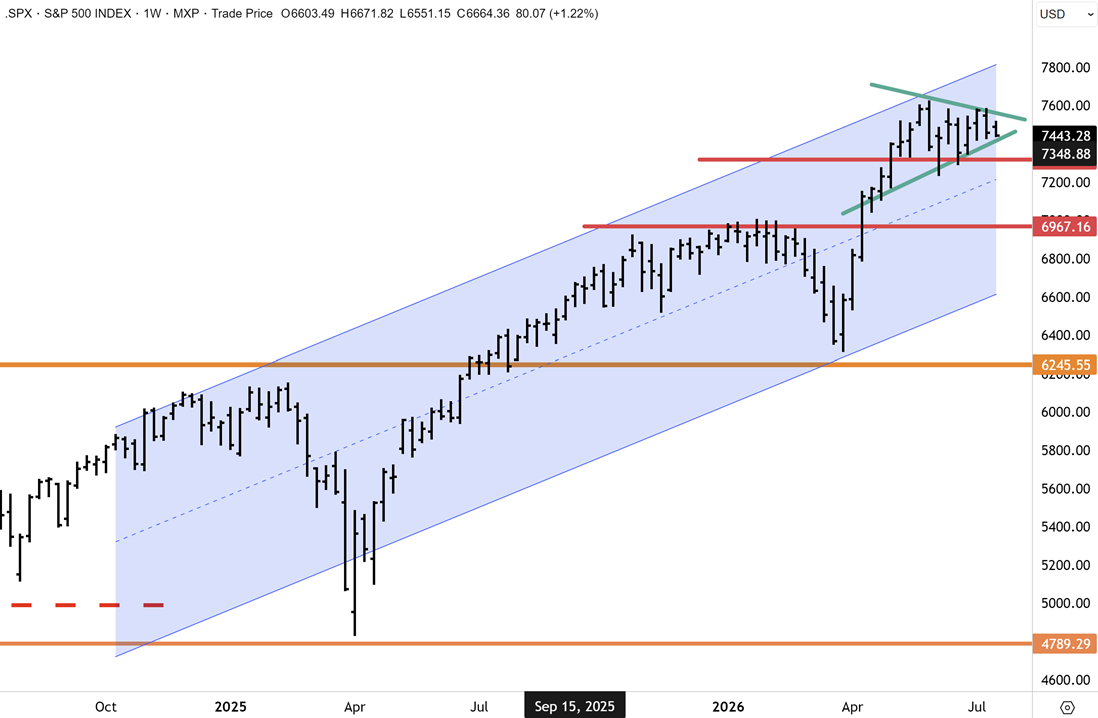
Meanwhile, our H2 base case has the US market rotating between sectors within a consolidation phase before new highs, with earnings solid and valuations below the September peak. I am excited about the reporting season, where we could soon begin hearing the narrative around AI from older economy-style companies, and this, in my view, could keep the bull market going in financial markets for some time. As the AI cycle evolves, I would expect the market to begin recognising different beneficiaries from AI at different stages in the rollout cycle, but generally, there is a big win coming for the global economy and the consumer.
Report Spotlight
Generation Development Group (ASX: GDG) – Buy
Generation Development Group’s three businesses show one coherent growth story. Group FUM (Funds Under Management) rose 36% to $46.4 billion in FY26, with every major franchise firing in sync. Generation Life delivered record quarterly sales inflows of $442 million, up 39%, while its FUM grew 35% to $5.95 billion, aided by a new distribution alliance with Colonial First State. Evidentia’s managed accounts FUM climbed 37% to $40.5 billion on $3.5 billion of net inflows, including the transition of $1.8 billion from Xplore Wealth.
Lonsec continues deepening the moat, now covering over 2,000 rated products with iRate subscribers up 13% to ~5,629, ensuring GDG captures both research and implementation fees across its integrated ecosystem. Half-year FY26 results already showed the operating leverage flowing through: revenue up 35% to $88.4 million and underlying NPAT up 63% to $20.1 million, with a 1.0 cent interim dividend signalling confidence in earnings sustainability. CEO Grant Hackett’s vertically integrated model, spanning product manufacturing, implementation and research, is structurally differentiated in the Australian wealth platform landscape.
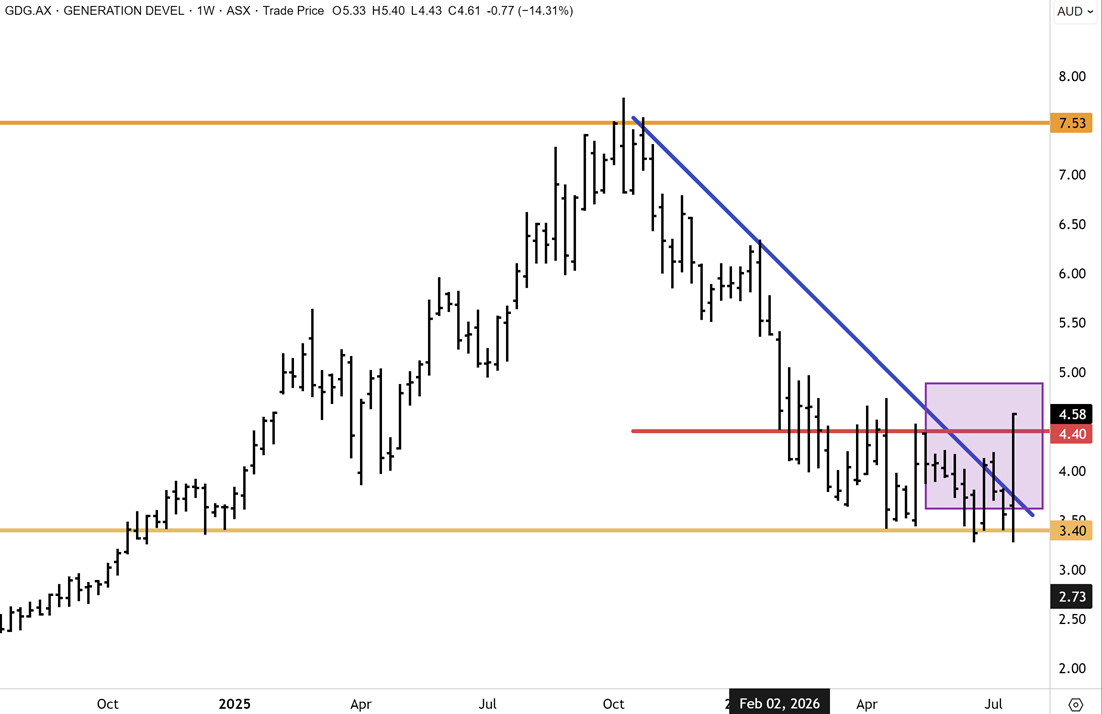
Despite a poor performance of GDG this year (which has coincided with broad underperformance of Australia’s small/mid cap sector). Downside momentum on the charts dissipated markedly between April and July, which is often a precursor to a change in trend. Yesterday’s breakout above the primary downtrend is therefore encouraging and points to an inflection potentially now confirmed for GDG. Looking ahead over the coming year, we expect momentum in the shares to pivot to the topside with support now well-defined at $4.40/$4 below. Scope is open for a decent recovery in our view, and we anticipate further upside to ensue over the coming year.
Everything in this fatLITE is the surface. The full reports, macro commentary, model portfolio, and buy recommendations are members-only. Try it with our 30-day money-back guarantee.
Have a great weekend.
Carpe Diem
Angus

